Replenish Primer
DON'T PANIC. The mostly harmless yet wholly definitive Replenish guide for Premodern.
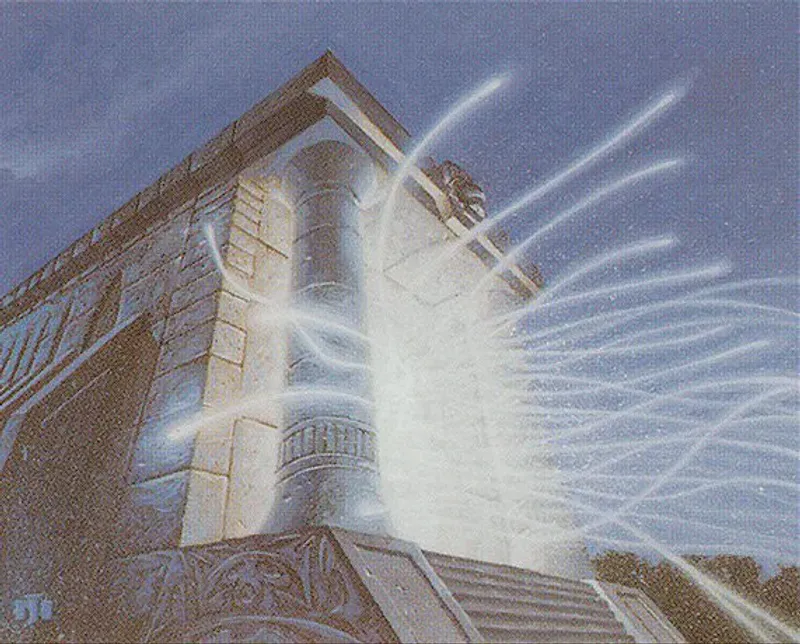
Greetings, tired traveler. You are about to look through this compendium, an extended interactive version of the wonderful guide originally written by Brian Siu (Dr Siuss). The text has been redesigned and improved to better serve your needs as the ideal tool for your current situation. So grab your towel, ensure your tray table is securely stowed, and let's cheat some enchantments into play.
What is Replenish?
Replenish is a classic combo-control deck that uses its namesake sorcery to cheat big, expensive enchantments onto the battlefield straight from the graveyard. The plan is simple: fill and filter your graveyard with card selection like Attunement or Frantic Search and then resolve a single four-mana Replenish to take over the board.
The Core Combo: The Opal/Wave Lock
The deck's primary win condition revolves around the interaction between two key enchantments
- Opalescence: Transforms all of your non-Aura enchantments into creatures with power and toughness equal to their mana values.
- Parallax Wave: Normally used to exile up to five target creatures temporarily. However, because Opalescence turns Wave into a creature, it can target itself.
By stacking four exile triggers targeting opposing creatures (or enchantments that, thanks to Opalecence, are now creatures) and then using the final fading counter to exile Parallax Wave itself, Wave leaves play before its initial exile triggers resolve. Because its return-to-play trigger resolves while nothing has been exiled yet, your opponent's creatures are exiled permanently once the remaining stack clears, and your Wave returns to the battlefield refreshed with five new counters. Incorporating Decree of Silence into this loop hard-counters every spell your opponent tries to cast for the rest of the game.
Strengths & Weaknesses
Why Play Replenish?
- Explosive Wins: A single resolved Replenish assembling the Opal-Wave-Decree lock usually wins the game on the spot.
- Role Flexibility: Seamlessly pivots between combo racing, defensive permission, and aggressive beatdown. You can adapt on the fly using disruption like Meddling Mage.
- Tactical Depth: Lots of tough decisions—you're setting up your graveyard ahead of time and working the stack to get through messy board states.
- Favorable Positioning: Naturally preys on midrange piles, draw-go control, and board-based engines like Enchantress. With Parallax Tide banned, you no longer have to build your entire deck in fear of instant land sweepers.
Weaknesses
- Graveyard Dependence: Inherently vulnerable to hate pieces like Tormod's Crypt, Phyrexian Furnace, and Planar Void (though post-sideboard creature transitions mitigate this).
- Multi-Axis Aggression: Vulnerable to decks that come at you from two angles at once (like a fast clock backed by mana denial or heavy countermagic).
- Faster Combos: Can struggle against ultra-fast linear engines like Devourer Combo that can combo off before your early disruption comes online.
- Mana Hungry: Primary engine spells sit at three and four mana, meaning you often have to play defensively until your card selection engines stabilize.
Ready to explore? Continue to the History of the Deck to trace how Replenish evolved across two decades of competitive play.